Is My Baby Too Big for Their Carrier? Understanding Growth, Proportions & When to Size Up
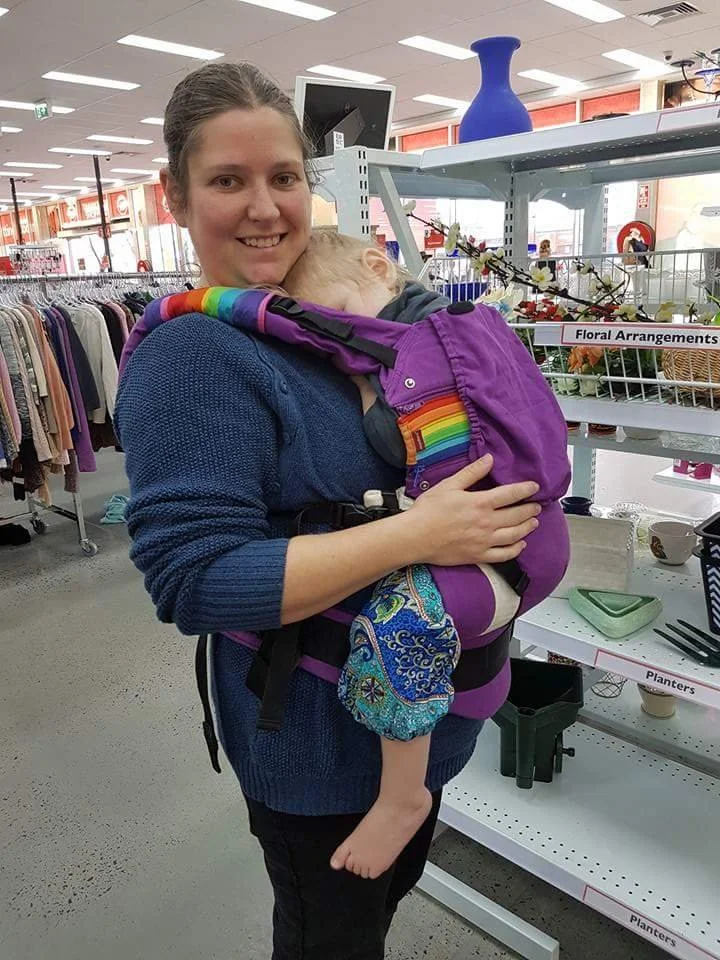
Parents often worry their baby will “outgrow” their carrier — especially when they see big jumps on the centile charts during the first months. But baby carriers are almost always designed for far longer use than parents expect. Understanding how babies grow and change across the first year (and beyond) is the key to making sense of those weight guidelines.
Let’s unpack what really matters: proportion, development and comfort — not the number on the scales.
Your Baby Will Never Grow Faster Than in the First Year
In the first 12 months, growth is astonishing. But it isn’t steady, and it isn’t sustained at the same rate across the year.
0–3 months: Building the foundations
This is the period of the steepest weight gain. Babies are:
wiring their nervous system
storing body fat
preparing for movement
This is why newborn-appropriate carriers matter — not because of size, but because of head control, muscle tone and positioning needs.
4–15 months: Growth slows while development accelerates
As babies learn to roll, sit, crawl and pull up, calories shift from fat storage into mobility and motor skill development. Length and head circumference continue to increase, but weight gain plateaus compared to those early weeks.
This is where many parents with bigger babies start to worry — but this slowdown is normal and expected.
After walking: Slow, steady growth
Once babies become upright walkers, growth slows even more. Cognitive development, language, balance and coordination take centre stage. It’s common for toddlers to gain very little weight between 12–18 months even as they grow taller and more capable.
Why This Matters for Babywearing
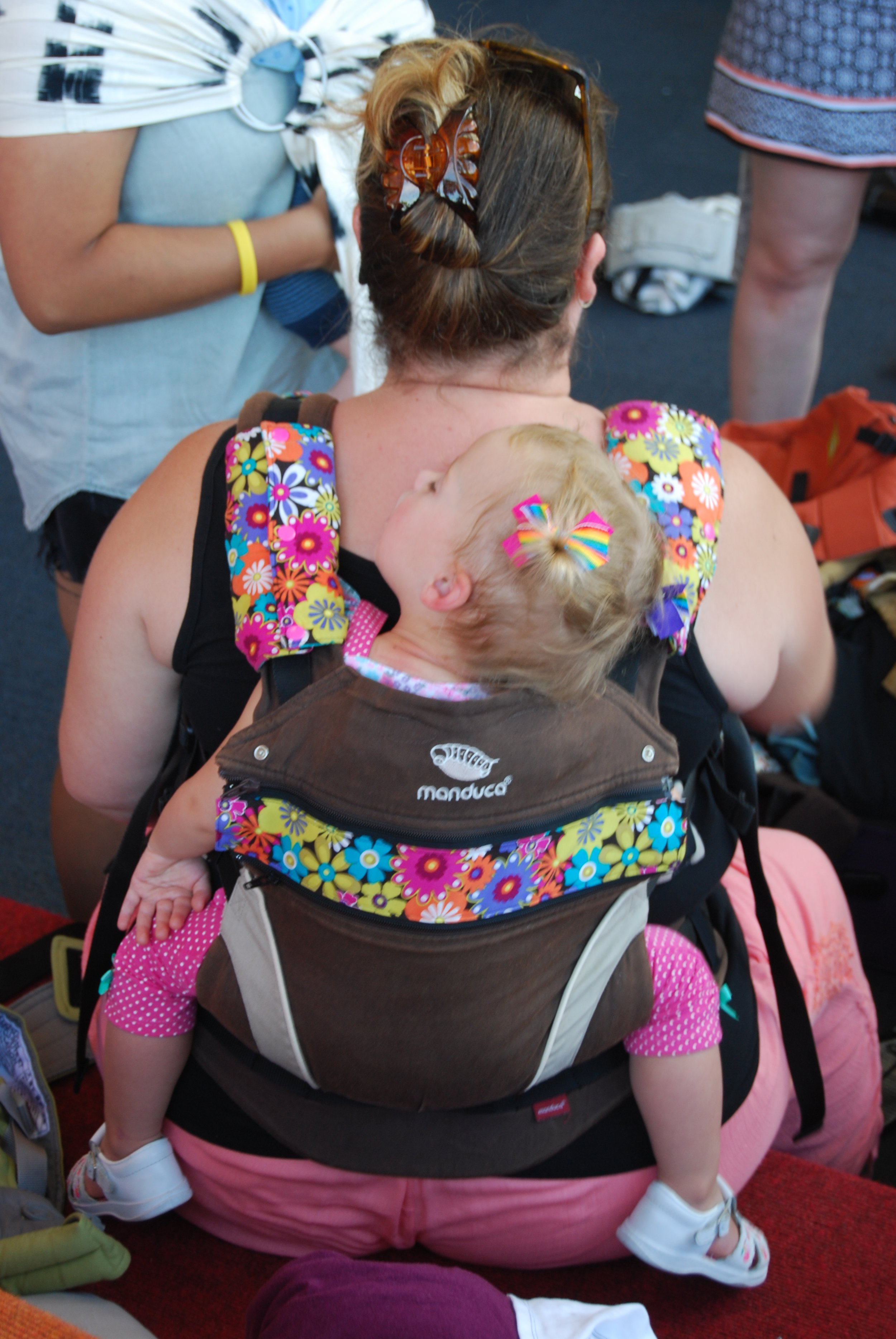
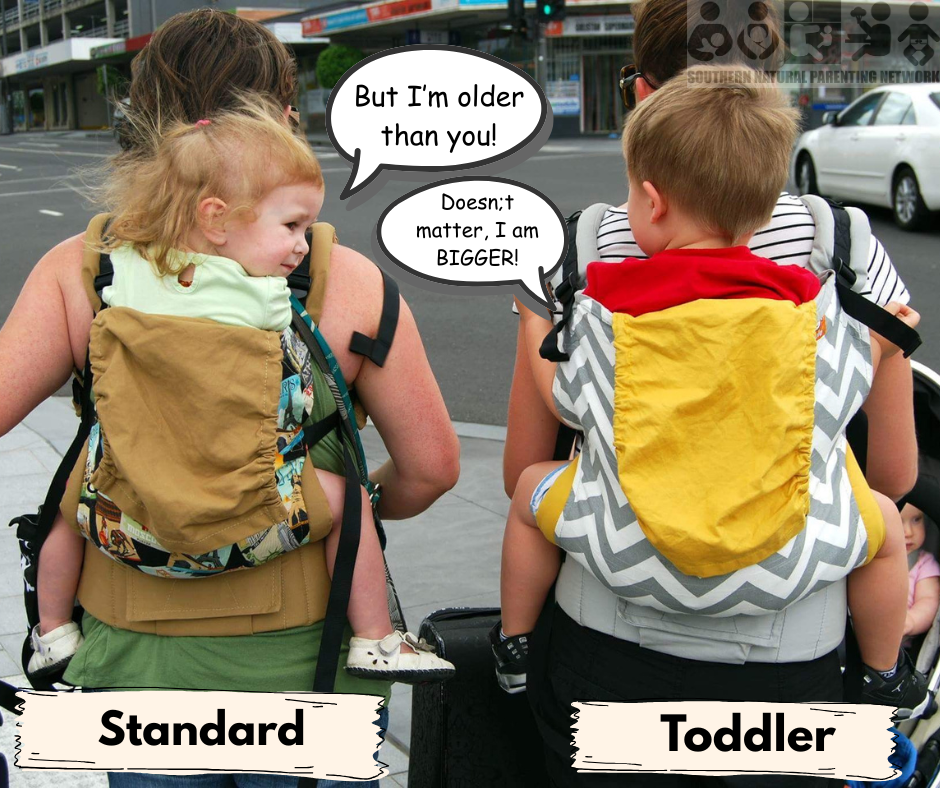
The term “toddler” is misleading in the carrier world. While we call any walking baby a “toddler”, toddler-sized carriers are generally designed for children aged 2–4, not the typical 12–18-month-old.
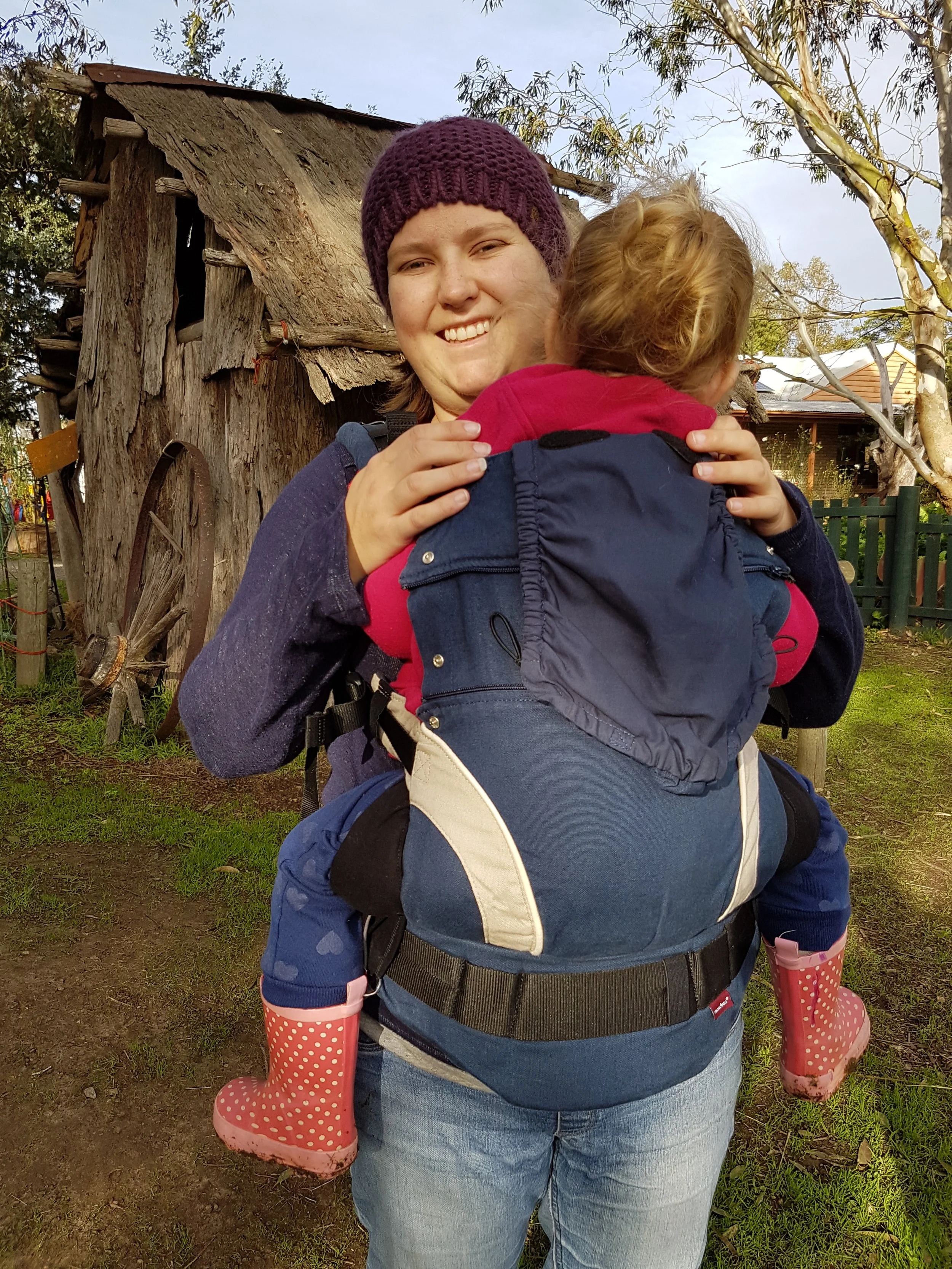
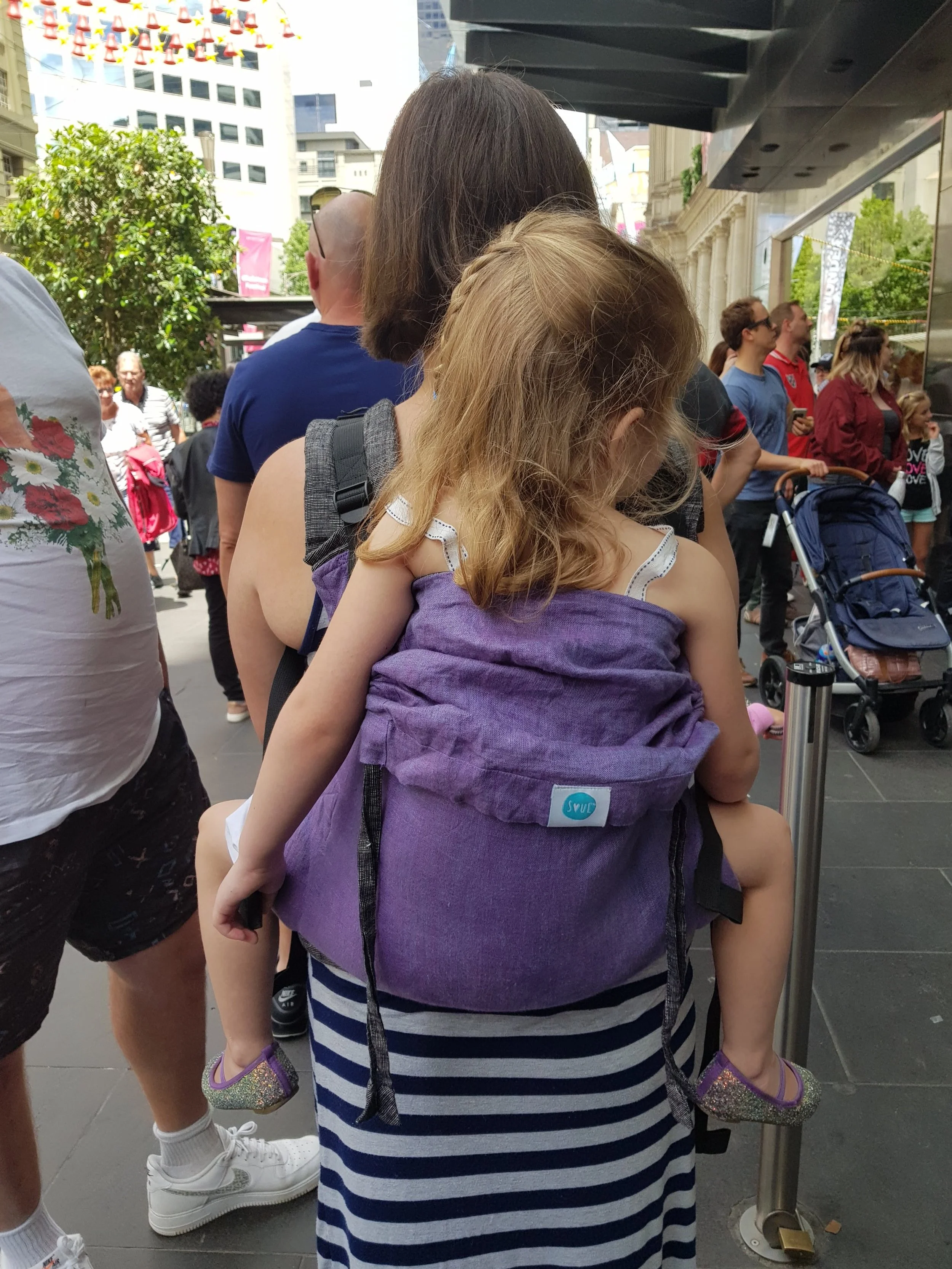
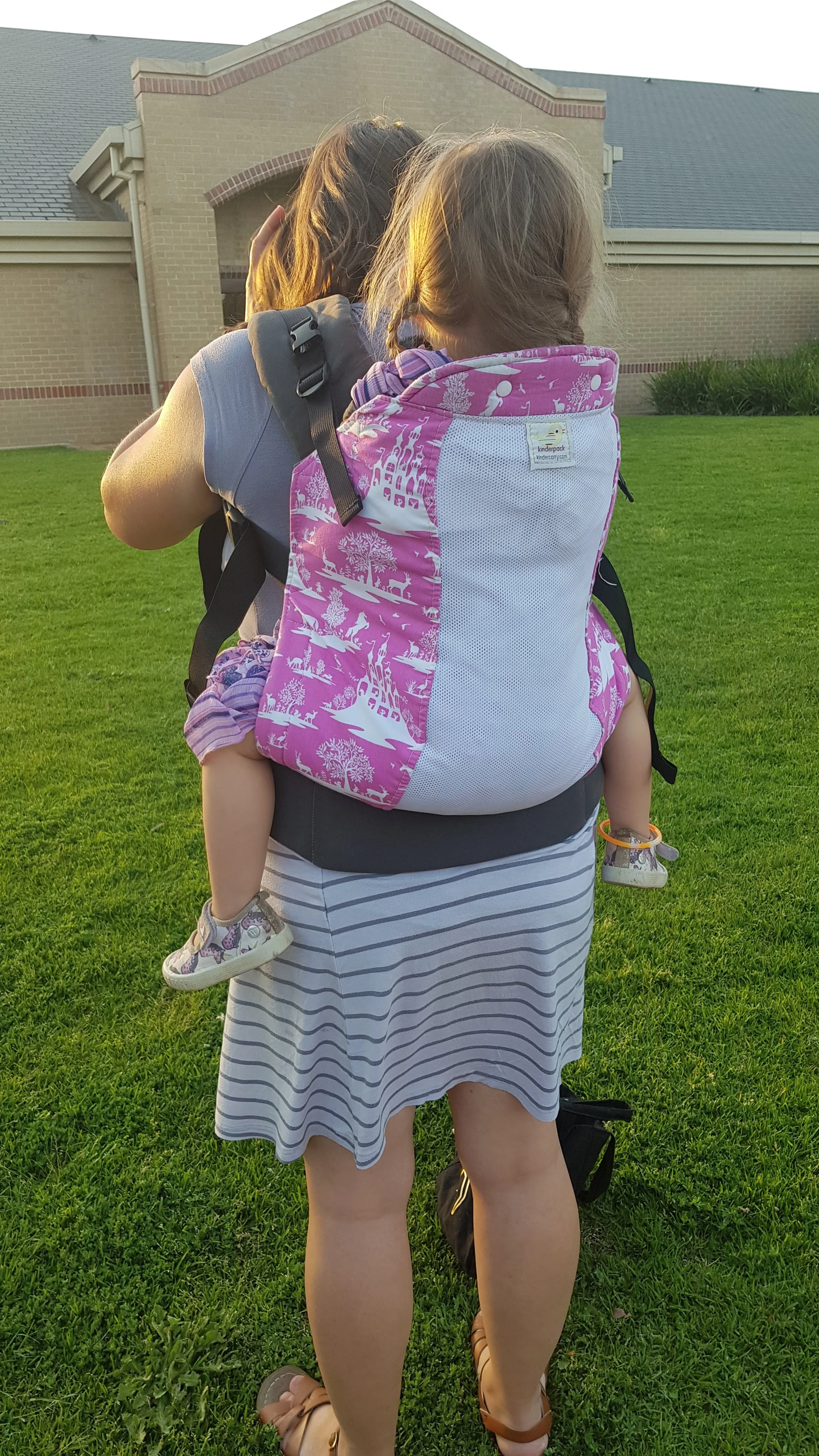
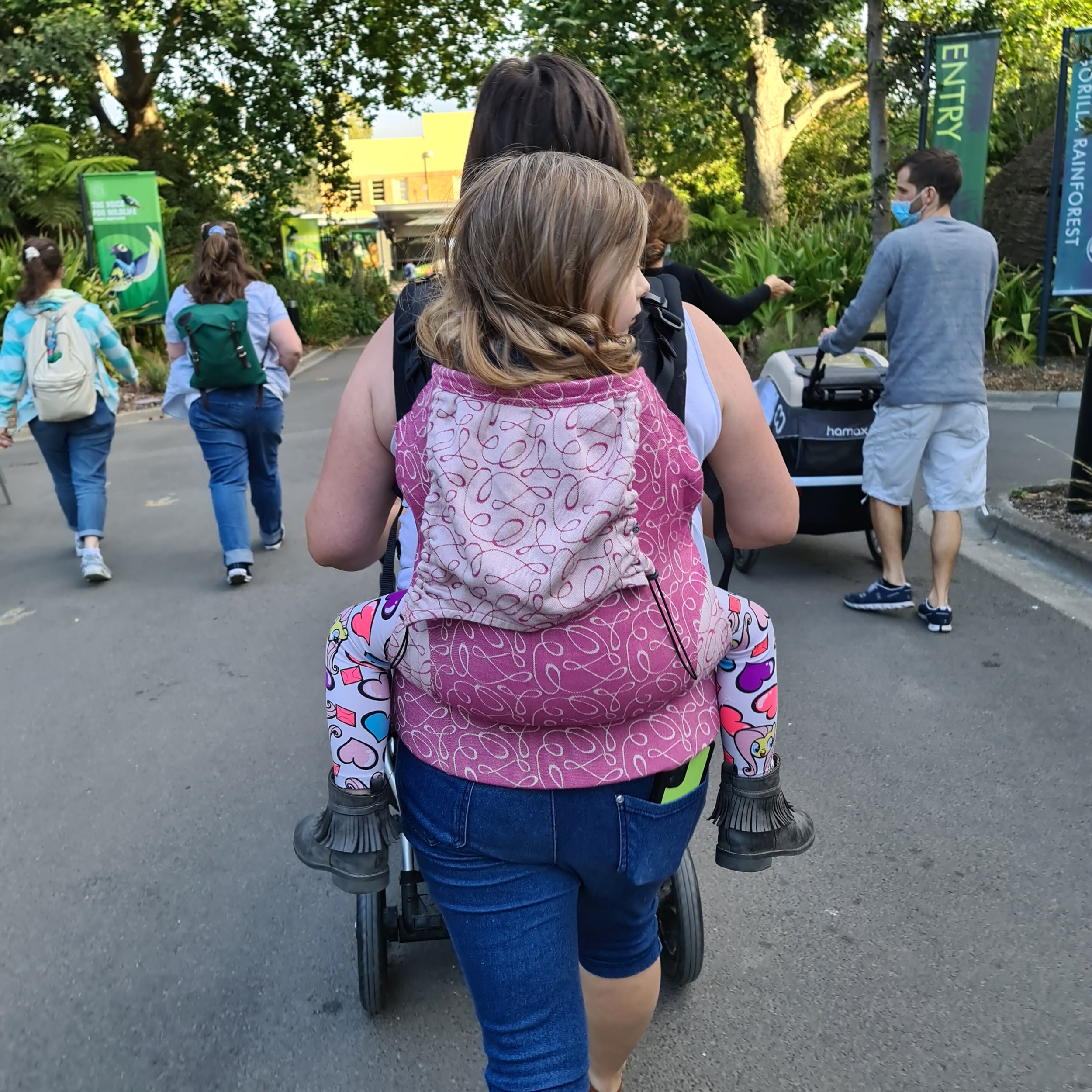
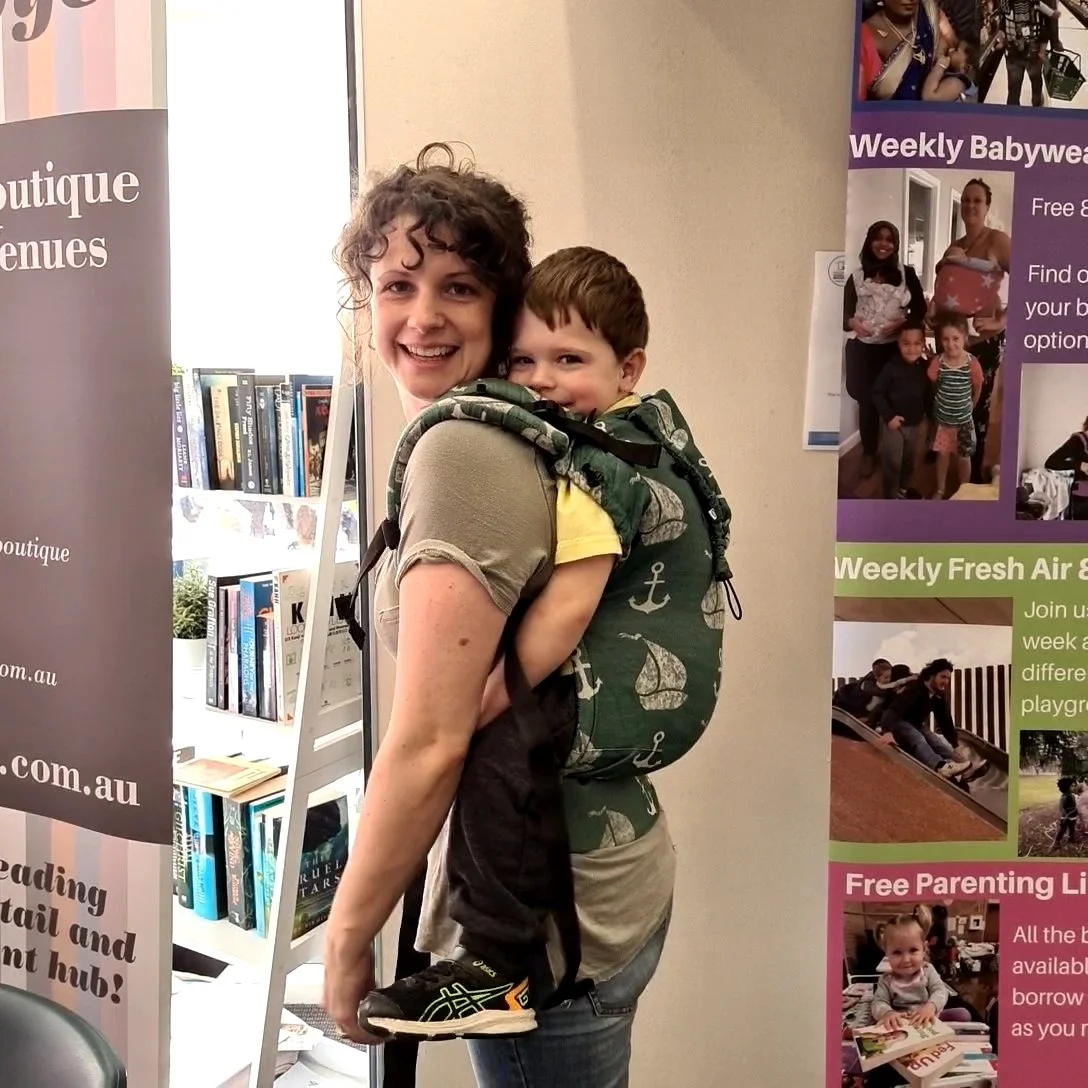
Most children stay in a standard-sized carrier until well after their second birthday. Some never transition out of the baby size at all.
And here’s the key:
Weight is one of the least useful indicators of whether a child needs a larger carrier.
What actually matters:
✔️ Torso length
Does the panel still reach to the base of their ears in a back carry?
If not, it may be time to size up.
✔️ Thigh length
Does the seat support them comfortably from knee to knee?
A little “gap” is fine; discomfort or digging isn’t.
✔️ Comfort for the wearer
Often a small adjustment — or switching to a back carry — solves the issue.
✔️ Movement stage
A 12-month-old who has just started walking is still an infant in terms of carrier proportions.
A Simple Rule of Thumb: Size 2 Pants
While every child is different, one very practical guideline is:
Most toddlers aren’t ready for a toddler-sized carrier until they are wearing at least size 2 pants (Australian sizing).
Size 1 pants often still fit children with “infant carrier proportions,” even if they are walking, climbing, or have had rapid weight gain in the first year. Size 2 signals the longer thighs and taller torso that toddler carriers are designed to support.
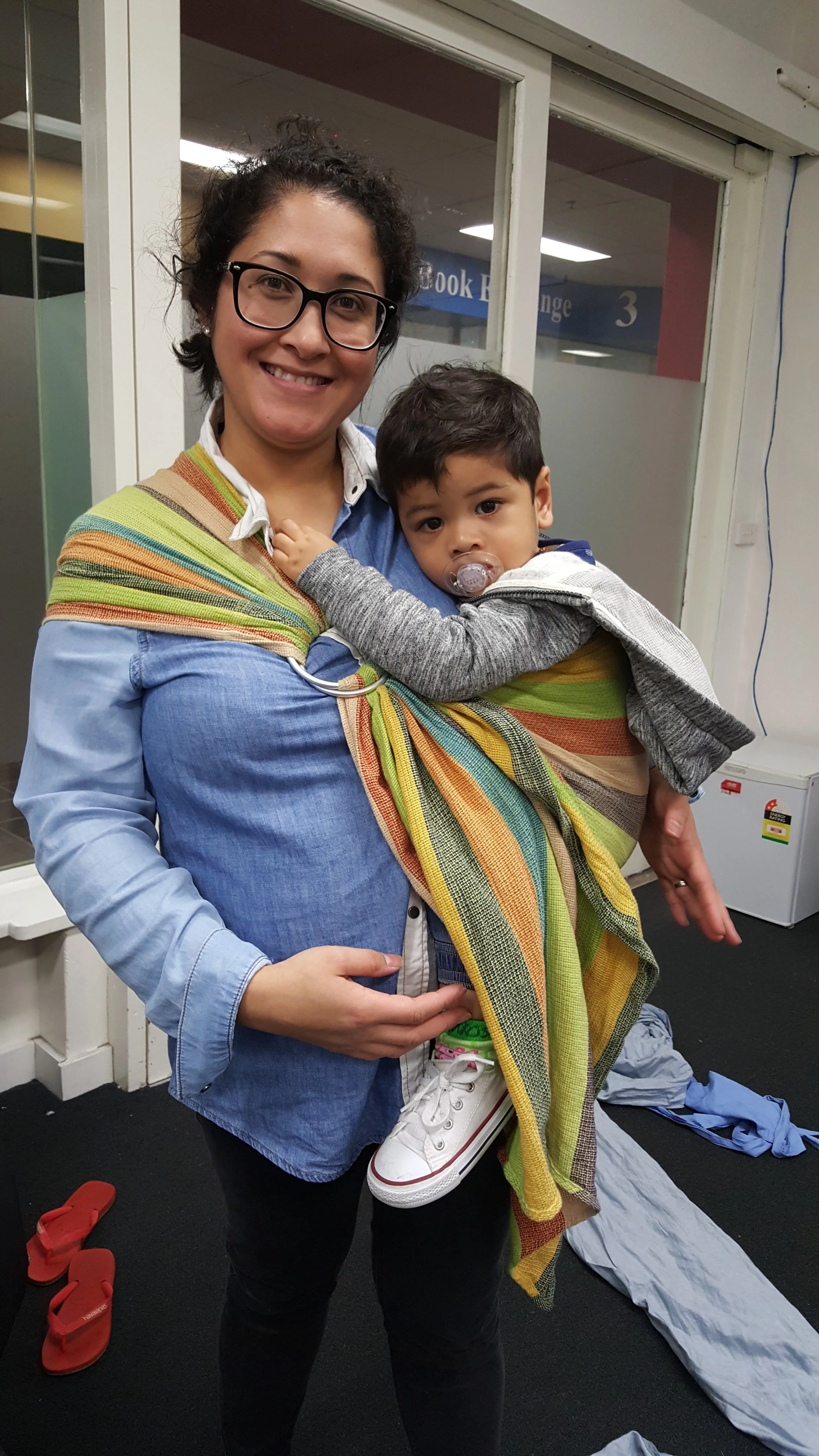
Families are often surprised to discover that their confident walker in size 0 or size 1 clothing still fits beautifully in a baby or standard-sized carrier with the right adjustments.
A Real-Life Perspective
Growth patterns vary widely between children. In our family:
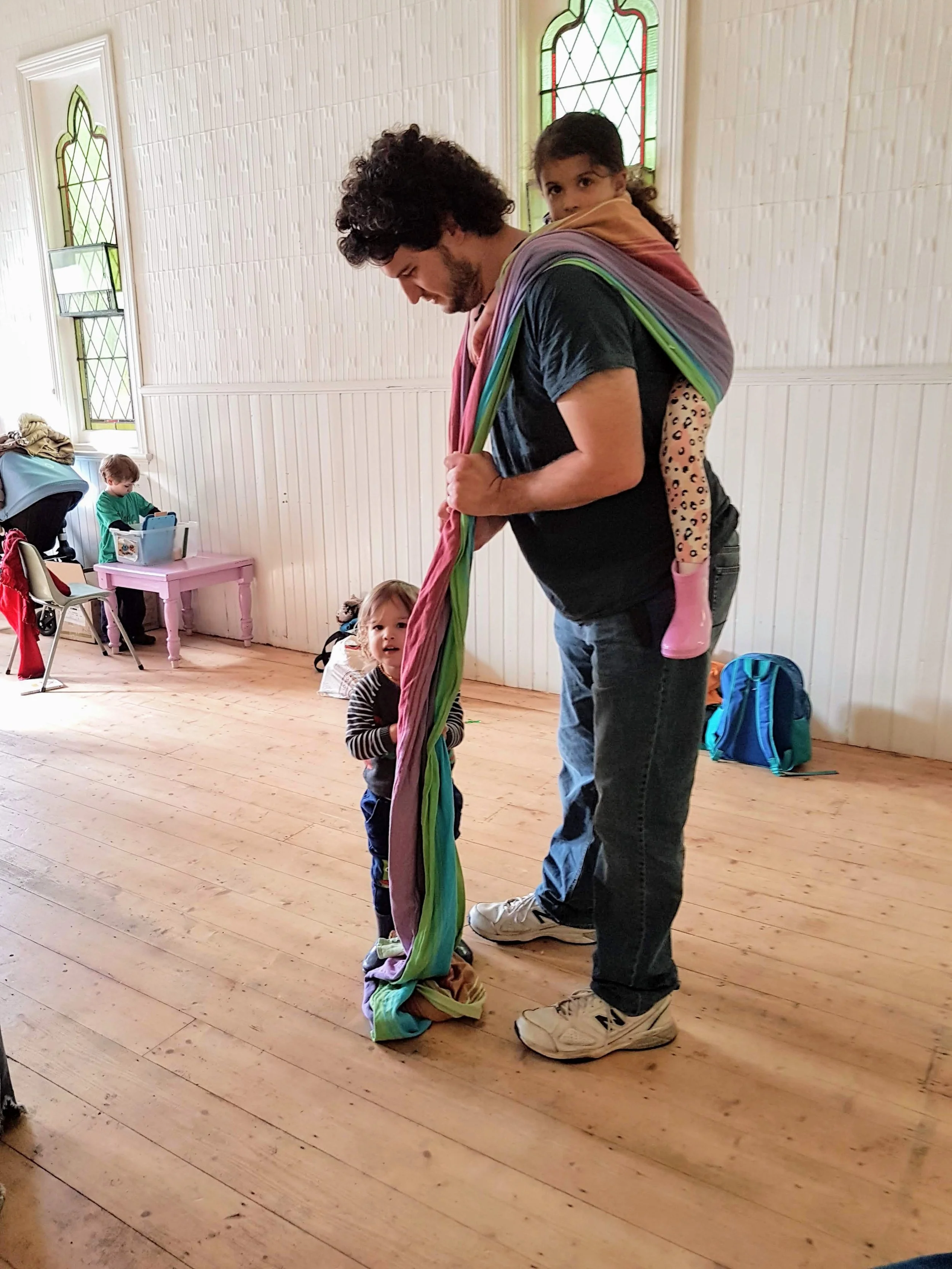
our 5-year-old boy weighs around 17 kg
his 9-year-old sister weighs around 20 kg
Both of these children are still technically within the safety weight guidelines of many baby carriers — we just don’t want to carry them anymore!
This highlights how generous the limits are, and how misleading it can be to focus on weight alone.
If You’re Unsure, You’re Not Alone
Babywearing educators hear the same questions every week:
“My baby is already 10kg — do we need a toddler carrier?”
“He’s 98th centile — will this carrier last?”
“She’s walking now — do we size up?”
In most cases, the answers are:
Probably not yet.
Yes, it will last much longer than you think.
Walking doesn’t equal toddler-carrier proportions.
A quick fitting session can save families hundreds of dollars and months of frustration. Most parents discover their carrier has far more life left in it than they realised.
Final Thoughts
Your baby’s growth slows dramatically after the first few months — even if the infant charts make it look like they’re racing ahead. Carriers are designed with long usability in mind. Don’t be guided by weight alone; look at how your baby fits in the carrier, not what the scales say.
Understanding growth patterns helps you make confident, informed choices — and ensures your carrier continues to support both you and your child comfortably through the months and years ahead.