
Baby Carriers and Newborn Babywearing: What Parents Need to Know
Many baby carriers are advertised as “suitable from newborn,” but this doesn’t always reflect how they fit real babies in the early weeks. Newborns vary widely in size, proportion, tone, and readiness. A carrier that works beautifully for one baby may not provide safe or comfortable support for another who is smaller, shorter, early-term, or still very curled from birth.
While manufacturers must list a minimum weight, it is only one part of assessing newborn suitability. Baby’s height, gestation, muscle tone, and overall physiology all influence whether a carrier provides a secure, airway-safe fit. This is why babywearing educators focus on fit-based readiness, not just weight-based guidelines.
What Newborns Need in a Carrier
In the first weeks, babies have:
limited head and neck control
a naturally curved spine
small, delicate airways
a strong need for close, contained support
A suitable newborn carrier should hold baby upright, chest-to-chest, face visible, and well supported from spine to pelvis, with gentle flexion and a clear airway. Carriers that wrap around the baby generally support this better than those that require the baby to fit into a pre-shaped panel.
Best Carrier Styles for Newborns
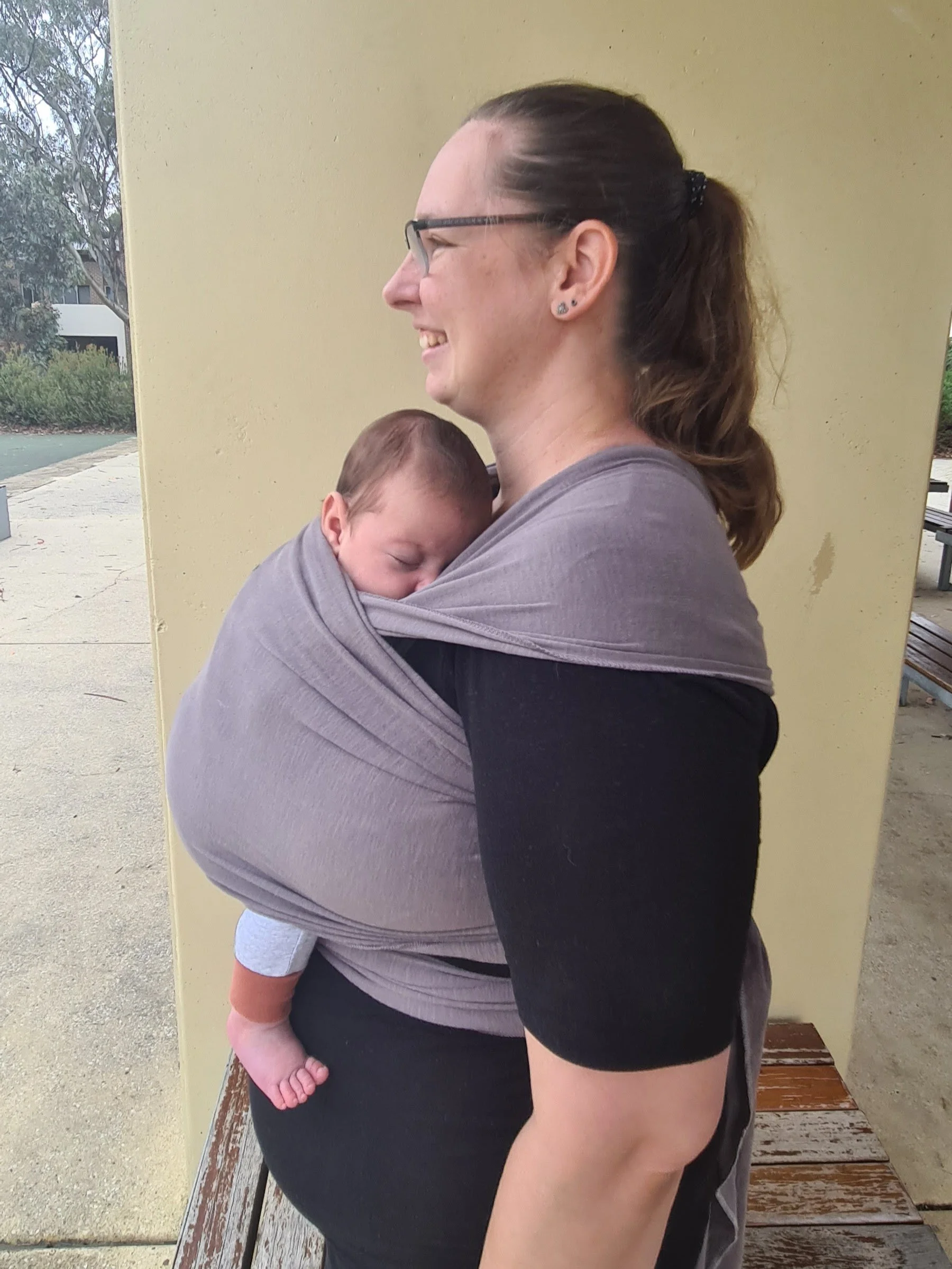
Stretchy Wraps
Stretchy wraps remain one of the most newborn-friendly options. They mould softly around the baby, support natural newborn positioning, and offer full-body containment without rigidity. They are ideal for skin-to-skin, contact naps, and babies who are very small, early-term, or still unfolding.
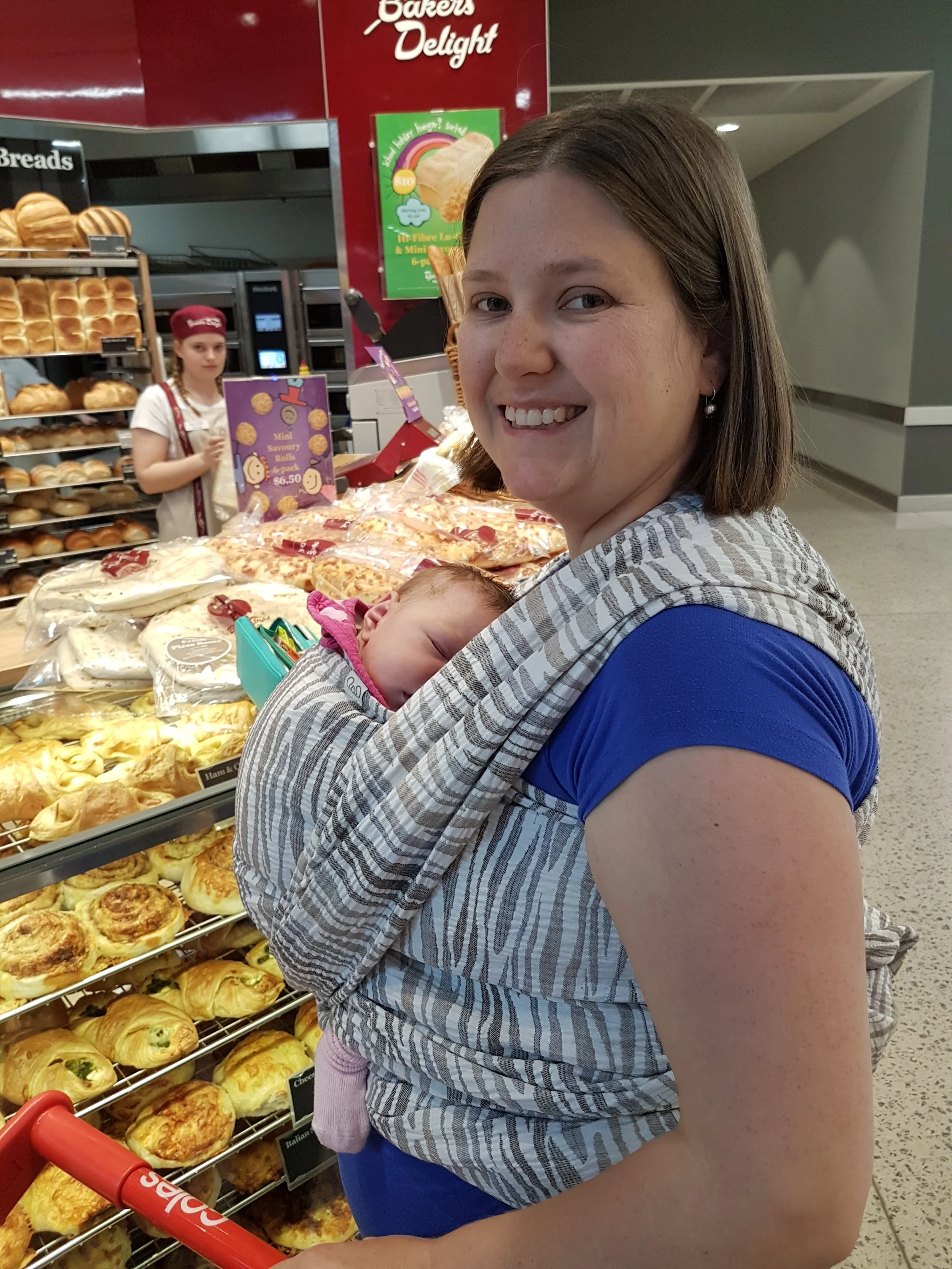
Woven Wraps
Woven wraps offer the most precise adjustment of any carrier. They can be tightened strand by strand to support the baby’s natural shape and provide excellent head, neck, and back support. They are highly adaptable and suitable even for babies under 3 kg when fitted correctly.
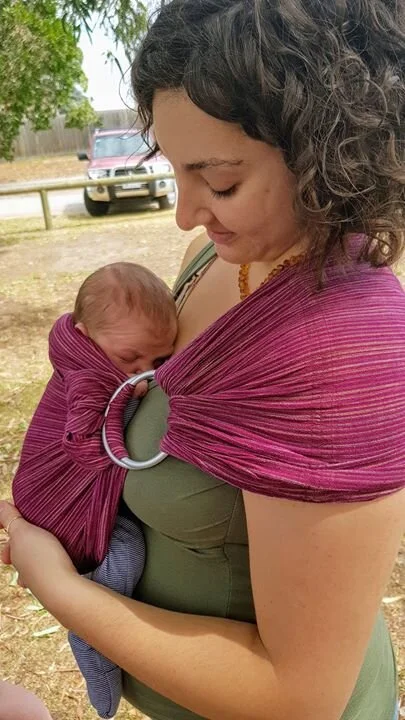
Ring Slings
Ring slings provide soft, adjustable support with excellent mouldability around the baby’s spine and pelvis. They allow fine tuning around babies with low tone, reflux, or asymmetry. They are quick to use and ideal for upright positioning in short to moderate periods of wear.
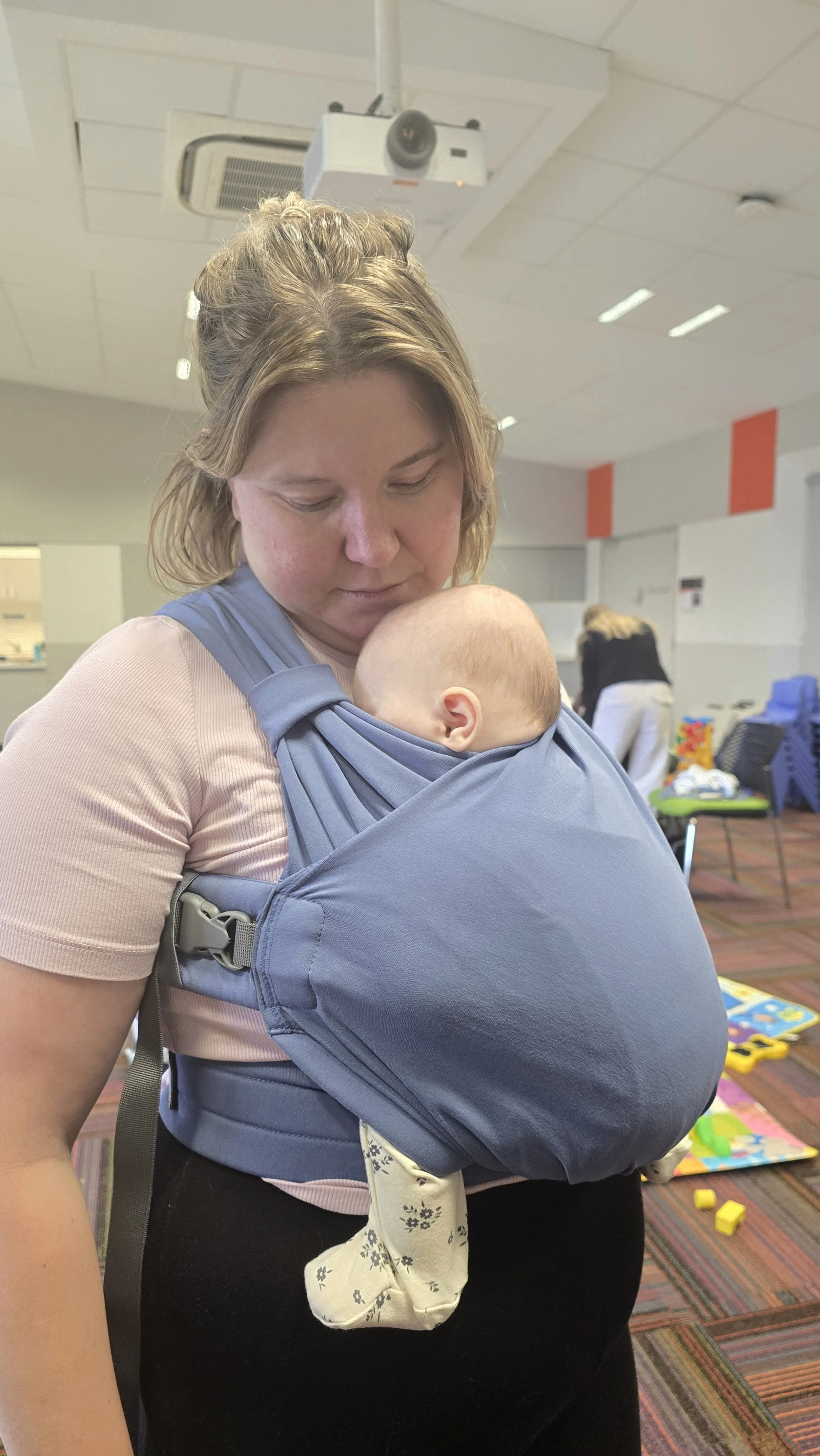
Hybrid Carriers
Hybrid wrap-structured carriers blend the softness of a wrap with the convenience of a buckle or tie. They are intuitive for beginners and offer wrap-like responsiveness around a newborn’s small body. Quality hybrid carriers offer a reliable newborn fit without requiring panel-based adjustments.
Using Soft Structured Carriers (SSCs) with Newborns
Many adjustable soft structured carriers can be used with newborns, but they are not always the best first choice—especially for babies who are very small, short, early-term, or have low tone.
Even newborn-approved SSCs require:
narrowing the seat correctly
shortening the panel
lowering the top of the panel below the earlobes
adjusting the straps for newborn positioning
ensuring no slumping or chin-to-chest compression
These carriers often work best once the baby is a few weeks old, has slightly more tone, and fills the panel more naturally. Some full-term newborns will fit well straight away, but many benefit from softer, more mouldable carriers first.
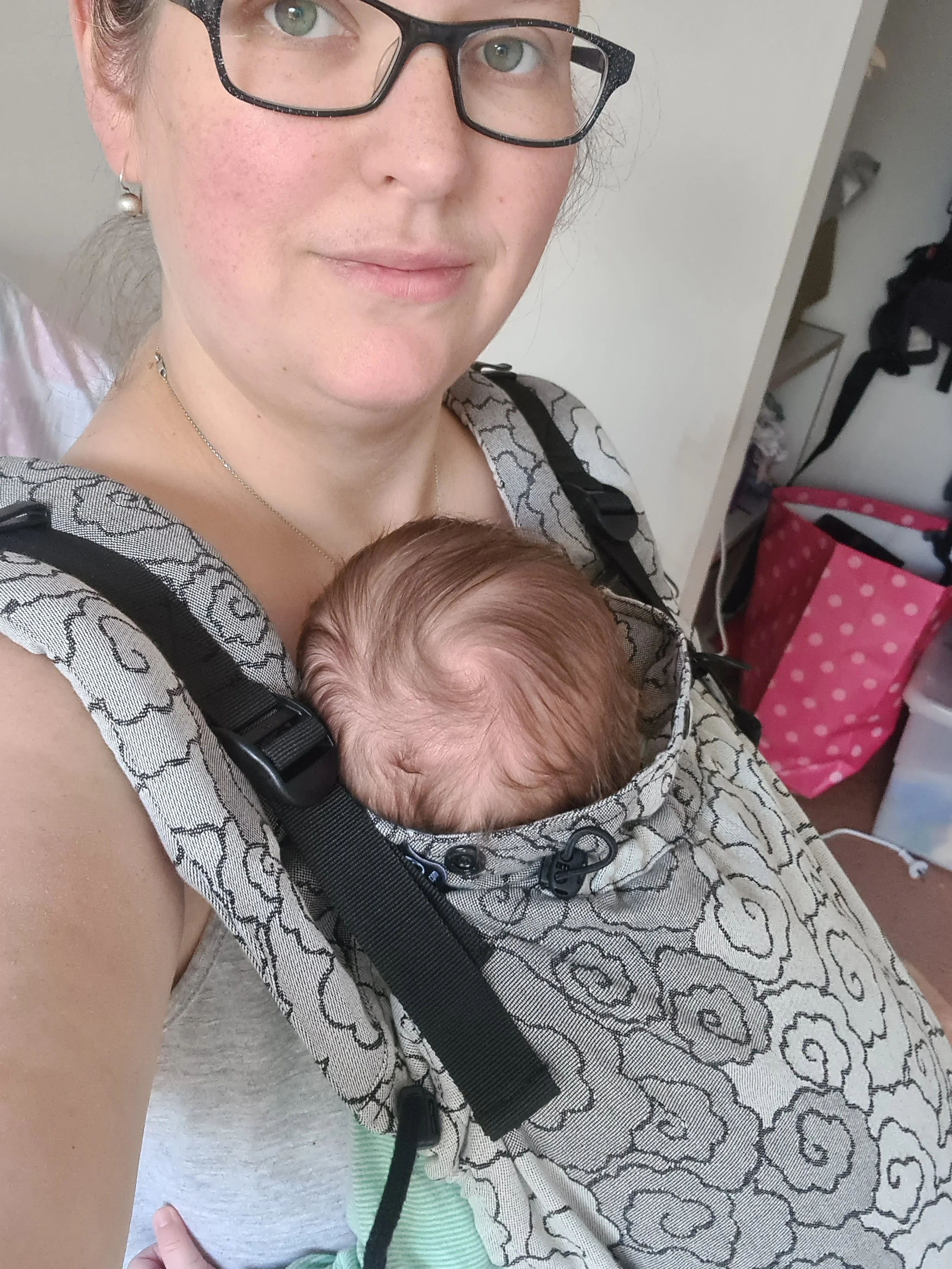
Choosing the Right Carrier
Newborn suitability is not determined by a label. It is determined by your baby’s unique characteristics and how well the carrier supports their airway, posture, and comfort.
For most young babies in the early weeks, the gentlest, most supportive options are:
stretchy wraps
woven wraps
ring slings
hybrid carriers
Soft structured carriers often become suitable once baby is a little bigger and stronger—or earlier with guided support and a carrier that adjusts well to newborn proportions.
Getting Support
Babywearing educators and consultants can:
assess newborn readiness and fit
help choose styles suited to your baby’s gestation, size, and tone
demonstrate safe airway positioning
support safe feeding in carriers
guide parents in using SSCs safely and comfortably
assist with postpartum comfort and ergonomic adjustments
You don’t have to work it out alone. The early weeks are a beautiful time to connect with your baby, and the right carrier can help make that closeness feel safe, supported, and peaceful.
